
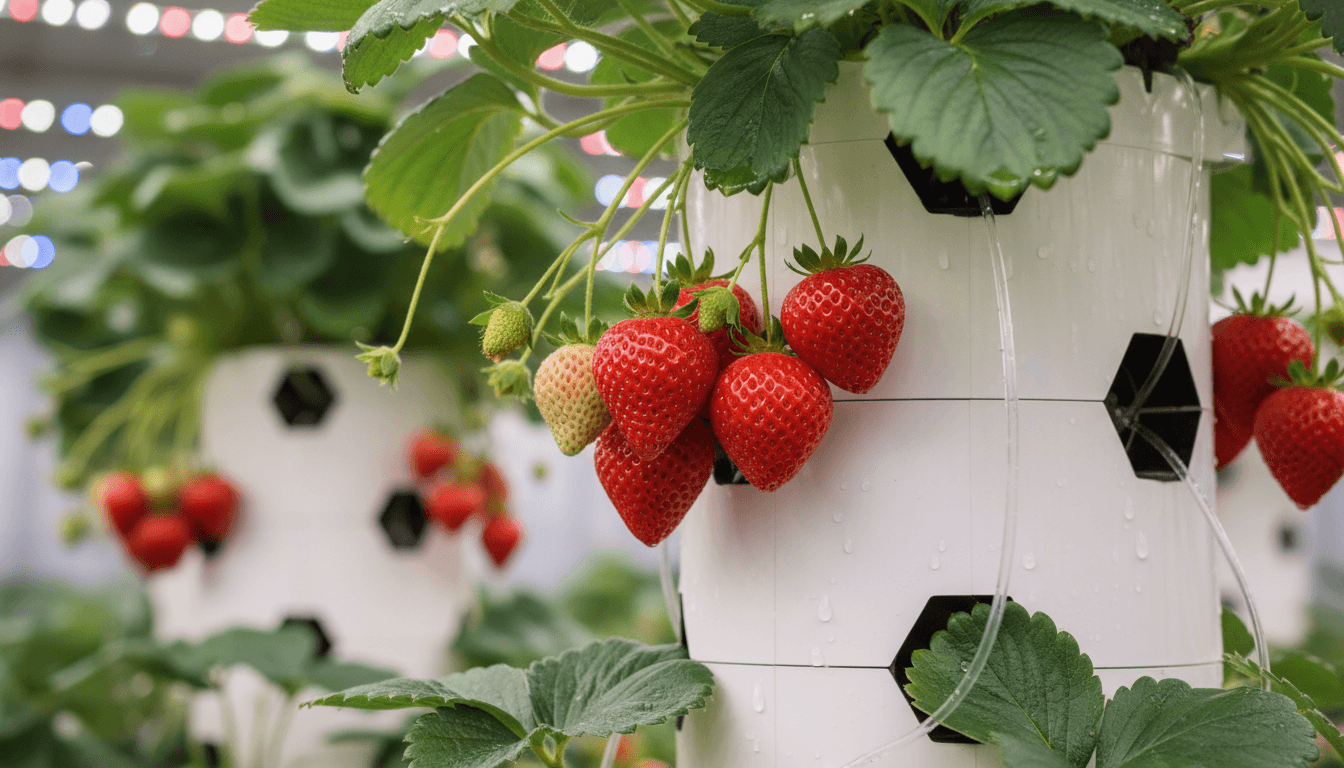
Grow strawberries year-round with vertical towers
Dillon's Strawberry Farm Ltd uses vertical grow towers to produce fresh, pesticide-free strawberries in Manchester. Learn how soil-free growing works.

Vertical grow towers grow strawberries without soil
Dillon's Strawberry Farm uses vertical towers with nutrient-rich water to grow day-neutral strawberries year-round. No soil, no pesticides, cleaner fruit. Plants stack vertically to maximise space and yield, delivering a near-continuous harvest for up to 40–50 weeks a year — with ripe berries ready to pick every 48 to 72 hours once plants are established.
Why taste matters more than size
At Dillon's Strawberry farm in Manchester, we grow for flavour. Vertical grow towers let us control every nutrient, ensuring sweet, juicy strawberries year-round without pesticides. Better fruit. Better farming.
Why vertical grow towers deliver real results
Discover how Dillon's Strawberry Farm Ltd uses vertical grow towers to grow more strawberries with less water, space, and crop loss.
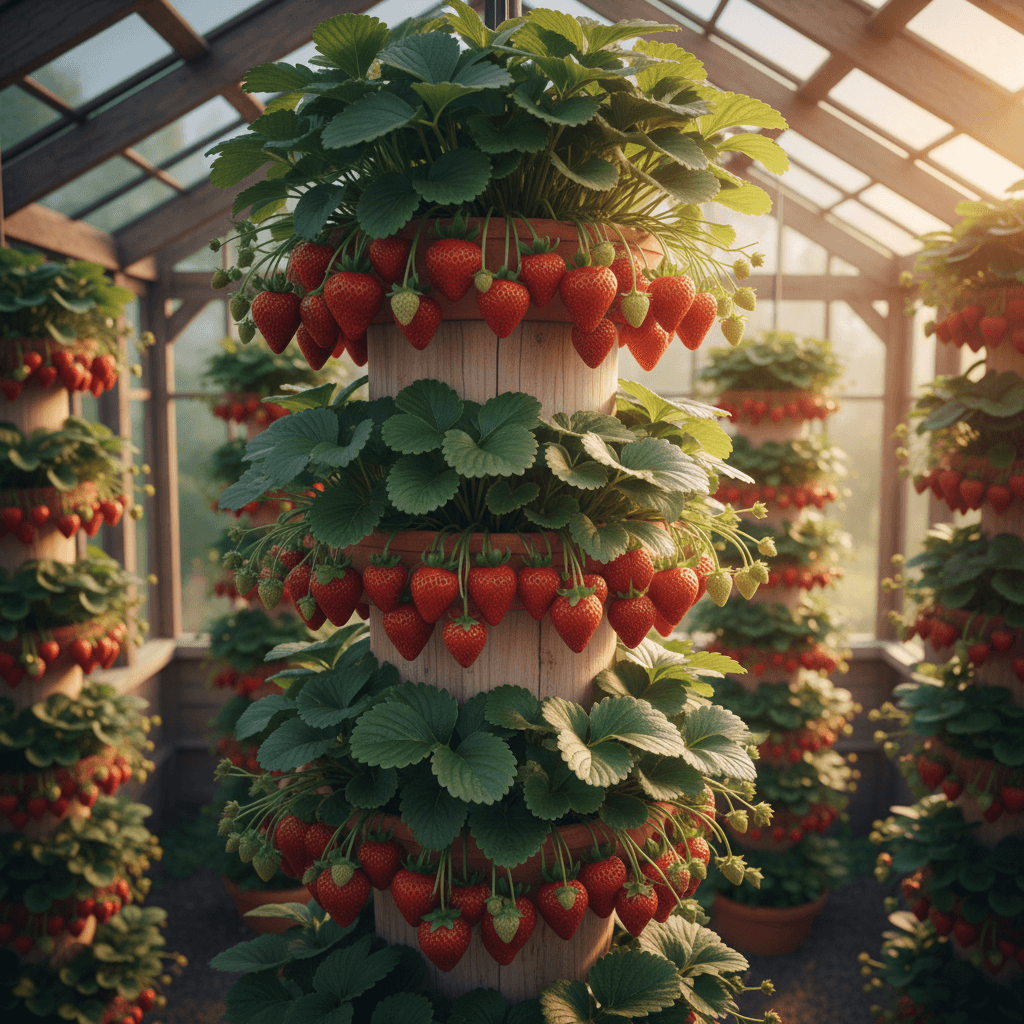
Higher crop yield
Grow more strawberries per square foot by stacking plants vertically instead of spreading them horizontally.
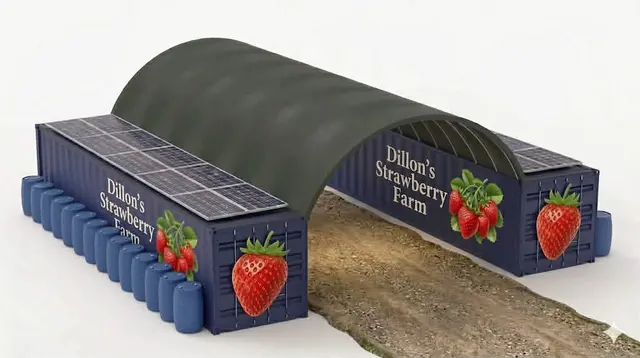
Reduce water waste
Hydroponic systems use up to 95% less water than traditional soil farming, recycling nutrients efficiently throughout the growing cycle.
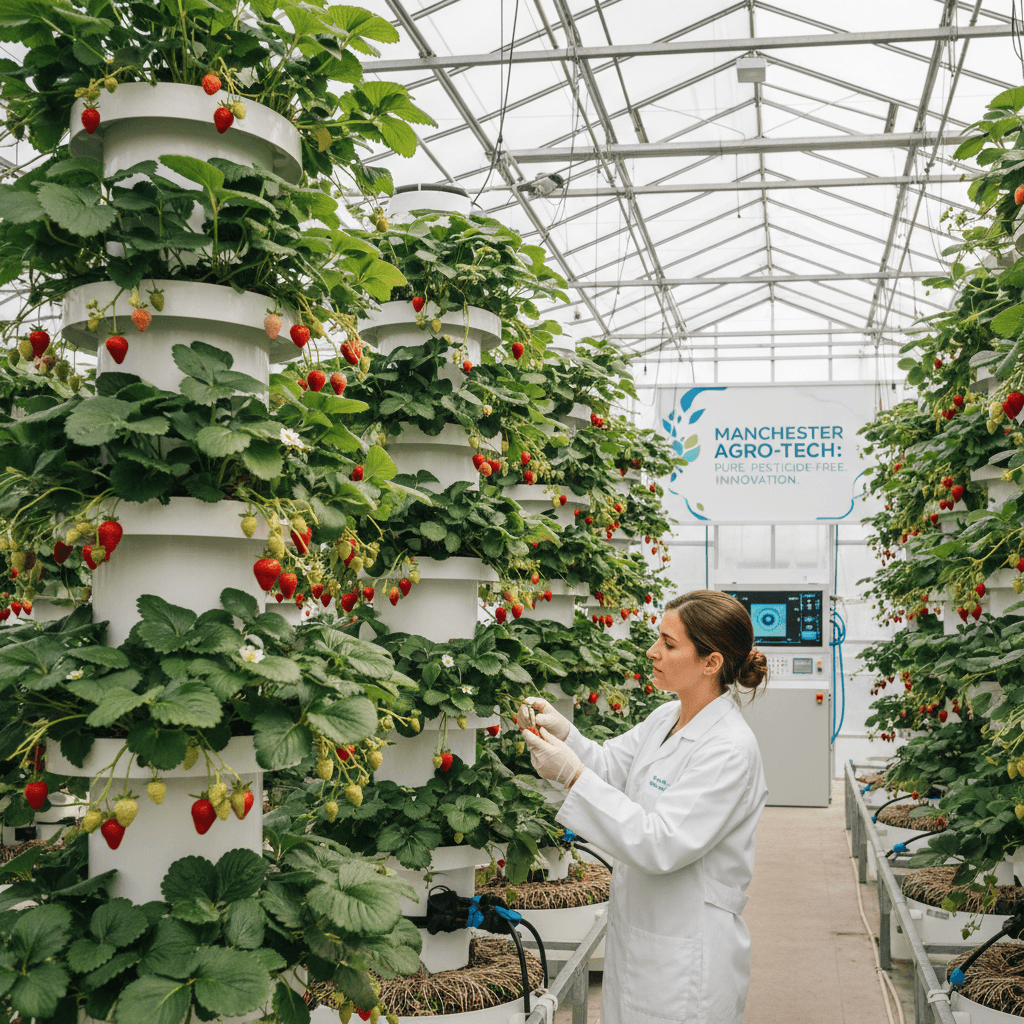
Pesticide-free growing
Indoor, controlled-environment farming eliminates the need for chemical pesticides, producing cleaner, safer strawberries naturally.

Year-round production
Indoor vertical growing lets Dillon's Strawberry Farm Ltd harvest fresh strawberries every month, regardless of season or weather.
Improved crop quality
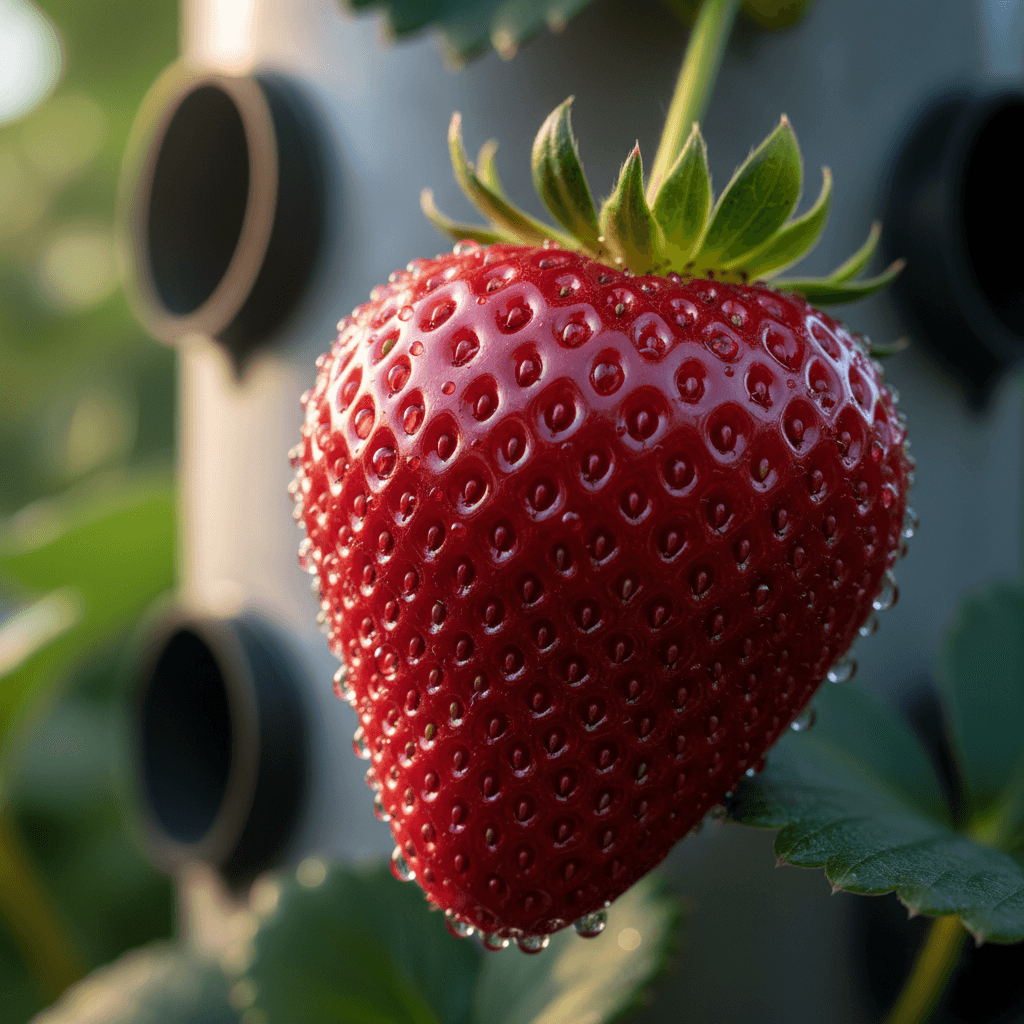
Optimized nutrients, consistent temperature, and controlled light produce sweeter, larger strawberries with longer shelf life.
Compact footprint
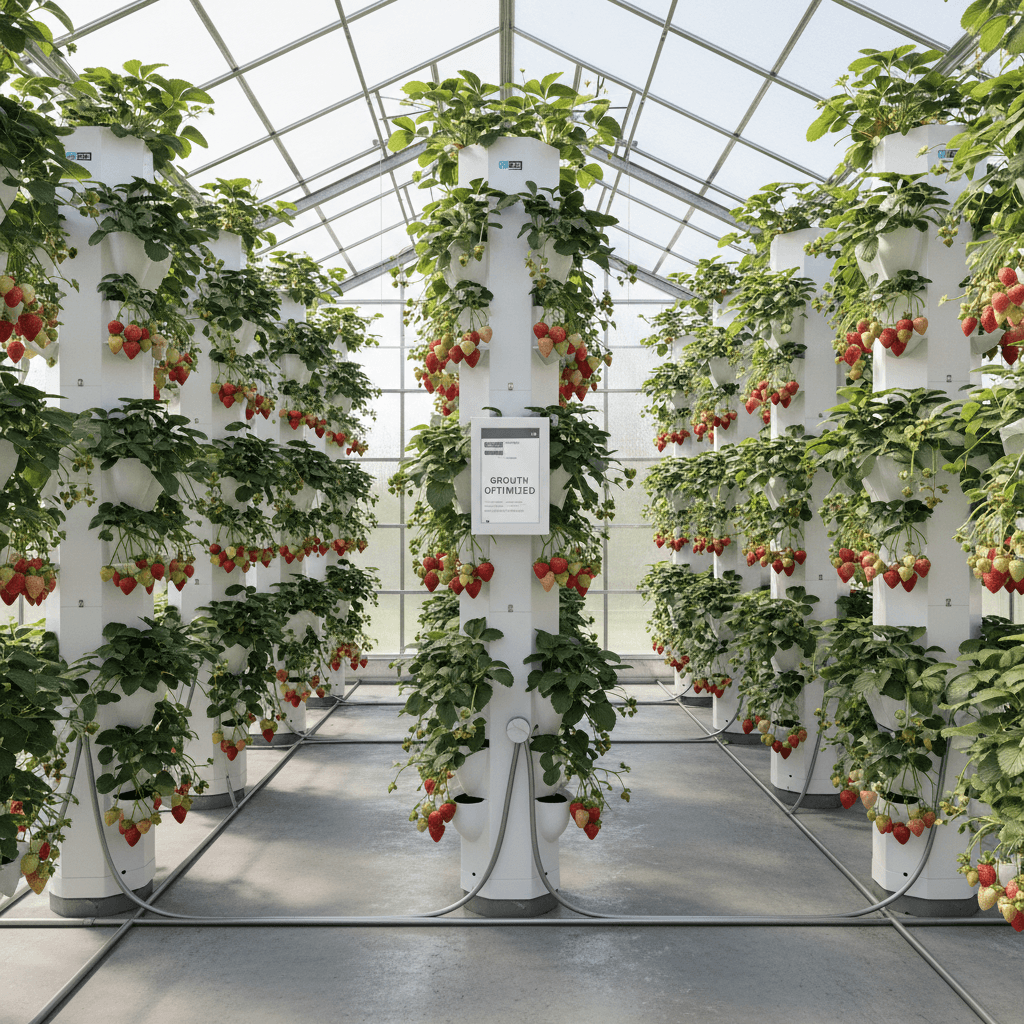
Vertical towers maximize growing space in small areas, making commercial strawberry farming viable for urban and suburban Manchester locations.
From setup to harvest in vertical towers
Follow this process to grow healthy strawberries in your tower. We'll walk you through each stage — from choosing the right variety and preparing the system, to pollination management and picking ripe fruit every 48–72 hours. Day-neutral varieties such as Albion, Seascape, and Evie-2 are recommended for vertical systems. **Step 1 — Choose your variety.** Albion produces large, firm berries with consistent output. Seascape is heat-tolerant and adapts well to greenhouse environments. Evie-2 is specifically recommended for vertical systems due to its high yield and lower sensitivity to summer heat. **Step 2 — Set up and plant.** Fill tower pockets with your growing medium, insert runners, and connect your nutrient feed. Allow approximately 2 months from planting for the first major flush of fruit. **Step 3 — Manage light and rotation.** Ensure all plants receive a minimum of 6–8 hours of light daily. Rotate towers regularly — manually or with a rotating tower system — to prevent shading on one side, which can cause sour or undersized fruit. **Step 4 — Maintain temperature and pollination.** Keep your greenhouse above 10–12°C to prevent production from stalling in winter. Since bees may not be present indoors, hand-pollinate flowers using a soft brush or introduce a commercial bumblebee hive to ensure good fruit set. **Step 5 — Harvest continuously.** Once established, pick ripe berries every 48–72 hours for peak sweetness and size. Expect a productive harvest window of 40–50 weeks per year with day-neutral varieties.
The numbers behind vertical strawberry growing
**Full Monthly OPEX — 500 Towers at Scale** All figures are estimates only and not financial advice. Based on UK 2026 rates. | Cost Category | Low/month | High/month | |---|---|---| | Nutrients (hybrid system) | £1,170 | £2,310 | | Water, filtration & misc. operations | £1,000 | £3,100 | | **Labour** (1 FT worker @ ~£12.21/hr + part-time harvest help) | £2,100 | £3,150 | | **Energy** (4hr LED top-up, net of scaled solar) | £190 | £475 | | **Packaging** (compostable punnets, labels, boxes ~15,000 units/month) | £1,600 | £3,300 | | **Total Monthly OPEX** | **~£6,060** | **~£12,335** | **Notes:** - Labour reduces significantly during early-stage operation when Anthony runs the farm solo. - The canopy design uses natural sunlight 12hrs/day — only a 4hr solar LED top-up is needed. - Solar offsets the LED top-up cost significantly; energy figures above are net of this saving. - **No individual 45w electrical pump is required per tower.** This eliminates per-tower pump costs and additional power consumption. - Packaging scales proportionally with output — a phased 50–100 tower rollout lowers this cost significantly. - Revenue at full scale: £20,000–£38,500/month. Mid-range net surplus: ~£20,000/month.
40–50wks
Harvest season per year
Day-neutral strawberries in a greenhouse deliver near-continuous production — up to 40–50 weeks of harvestable fruit annually.
95%
Less water used
Closed-loop hydroponic systems recycle water, cutting consumption dramatically compared to traditional soil farming.
0.5–1kg
Yield per plant per year
In ideal greenhouse conditions, each plant produces 0.5–1 kg of fruit annually — delivering 20–40 kg per tower at 40 plants.
0
Pesticides needed
Soil-free vertical growing eliminates most pest and disease pressure without any chemical intervention.
Growing strawberries vertically
Get answers to common questions about vertical grow towers, how to get started, and what to expect.
Sponsor a tower and grow with us
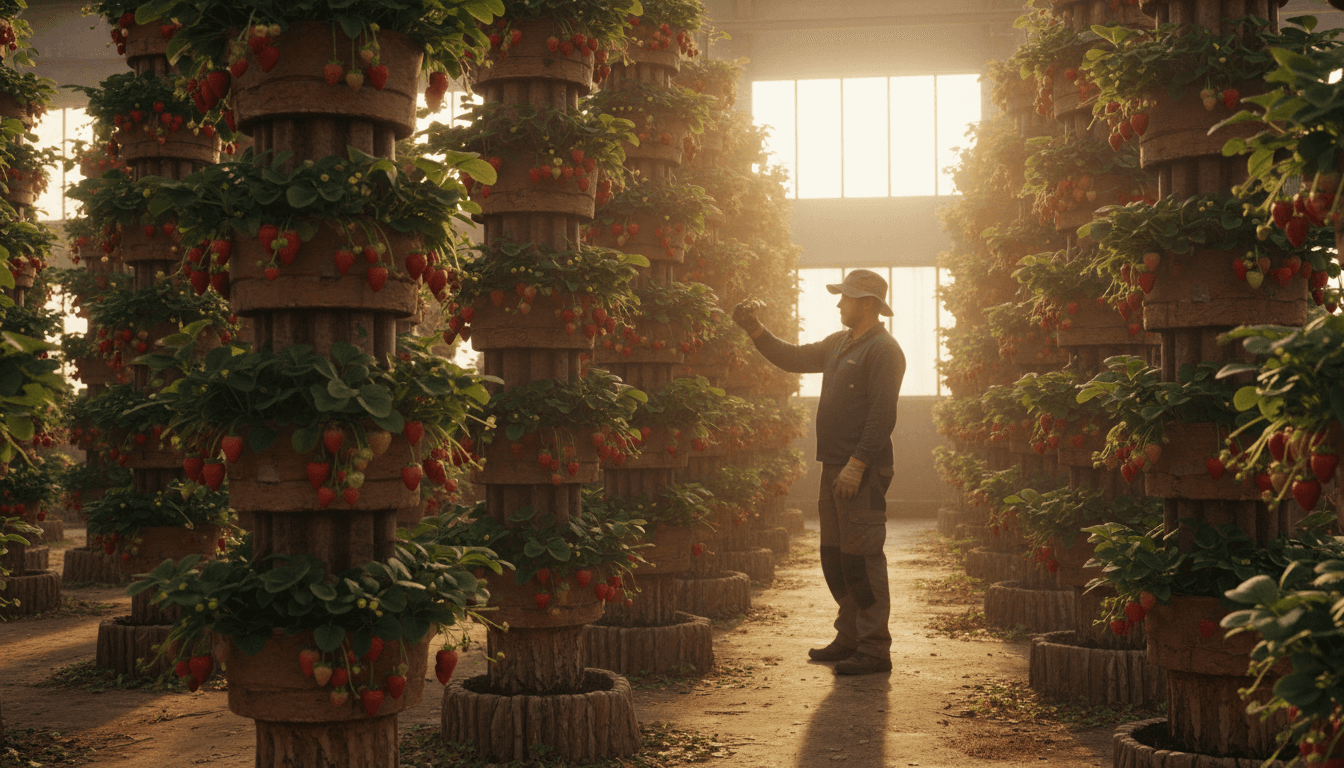
Back Dillon's Strawberry Farm Ltd in Manchester and help scale sustainable vertical farming across the UK.