
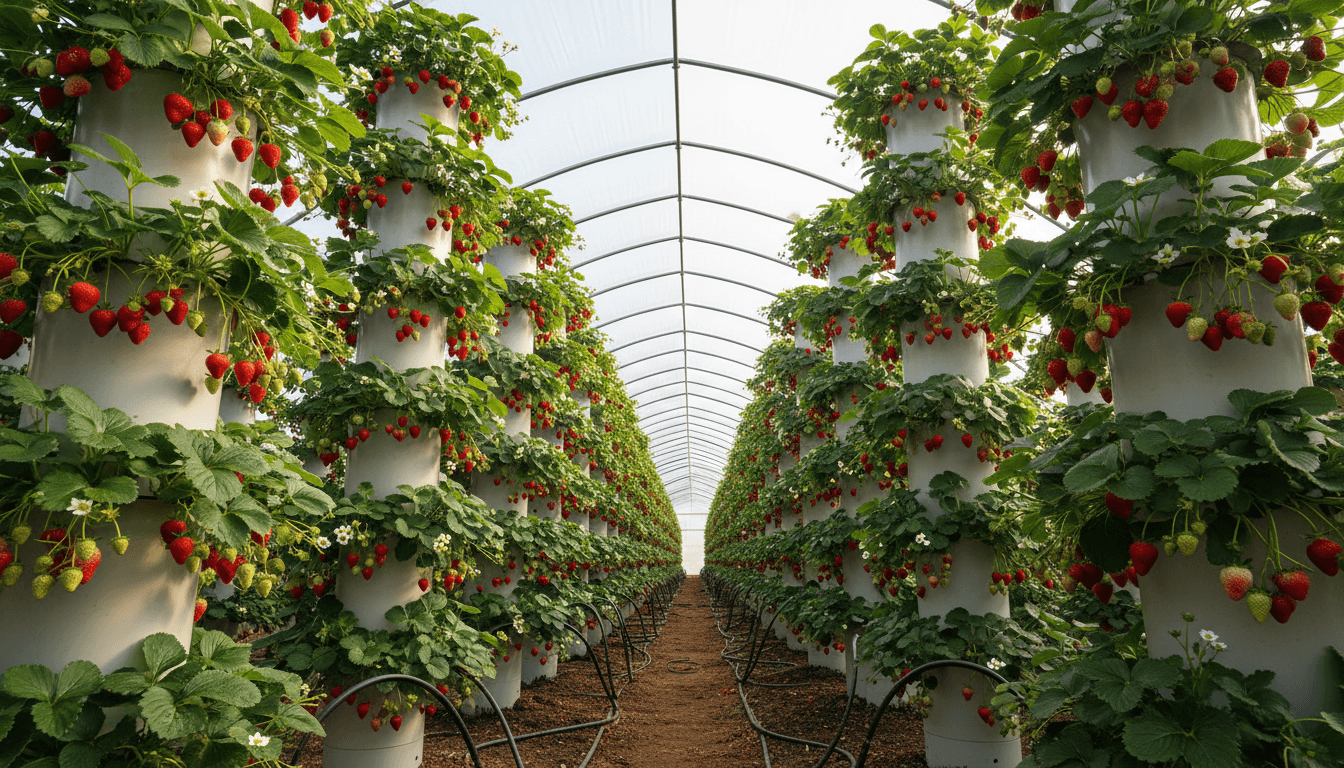
Grow More Strawberries In Less Space
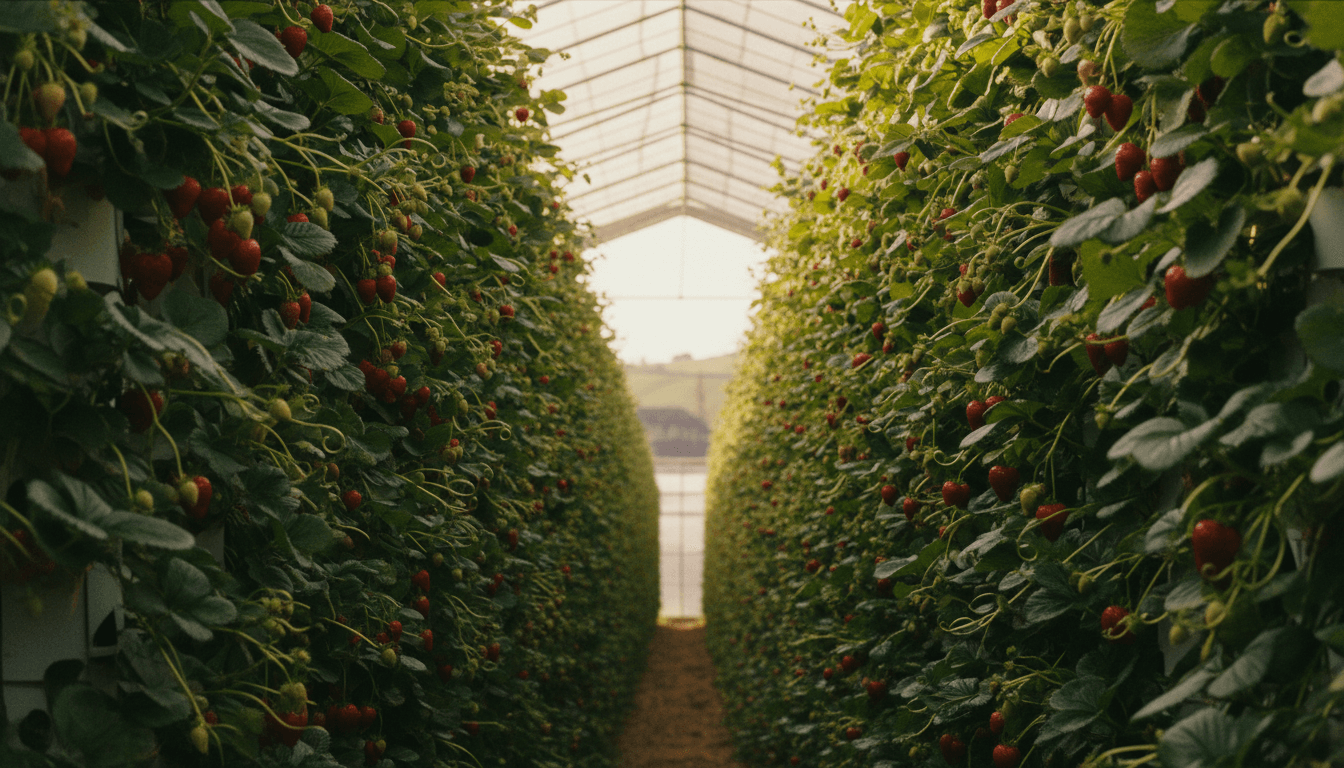
Vertical tower growing transforms how you cultivate strawberries. Stack plants upward, maximize your yield, and control every growing condition with proven indoor and outdoor methods.
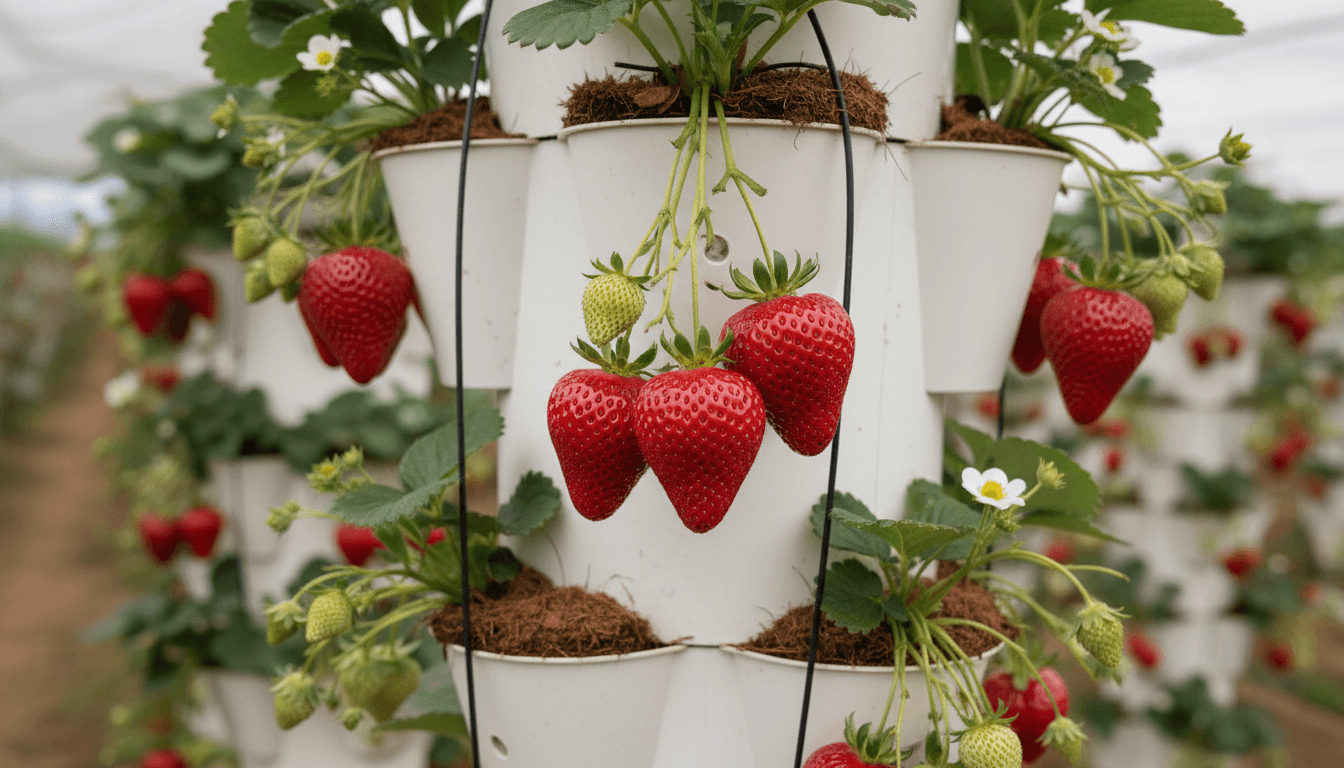
Indoor vs Outdoor Tower Growing
Each method offers distinct advantages. Choose based on your space, climate, and production goals.
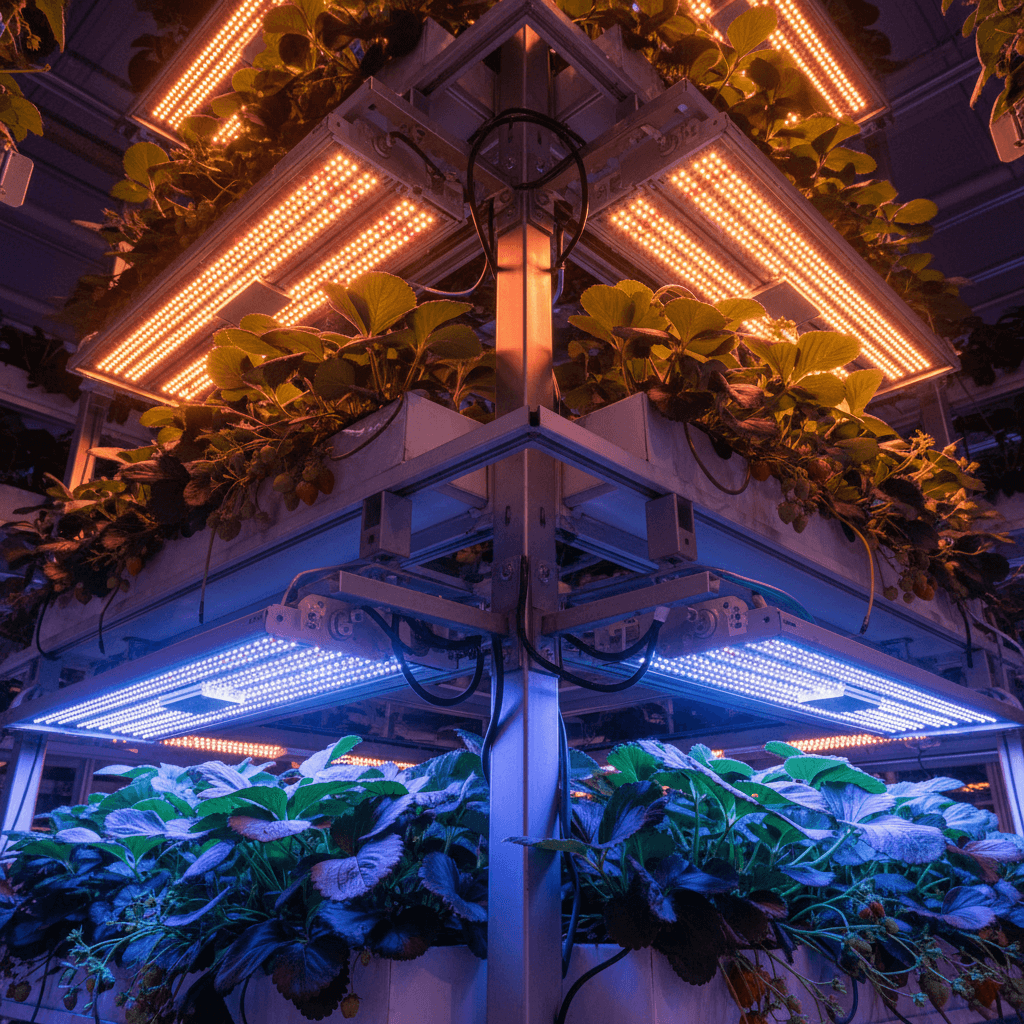
LED Grow Lights
Full spectrum LED systems deliver consistent light year-round, enabling controlled growth independent of seasons.
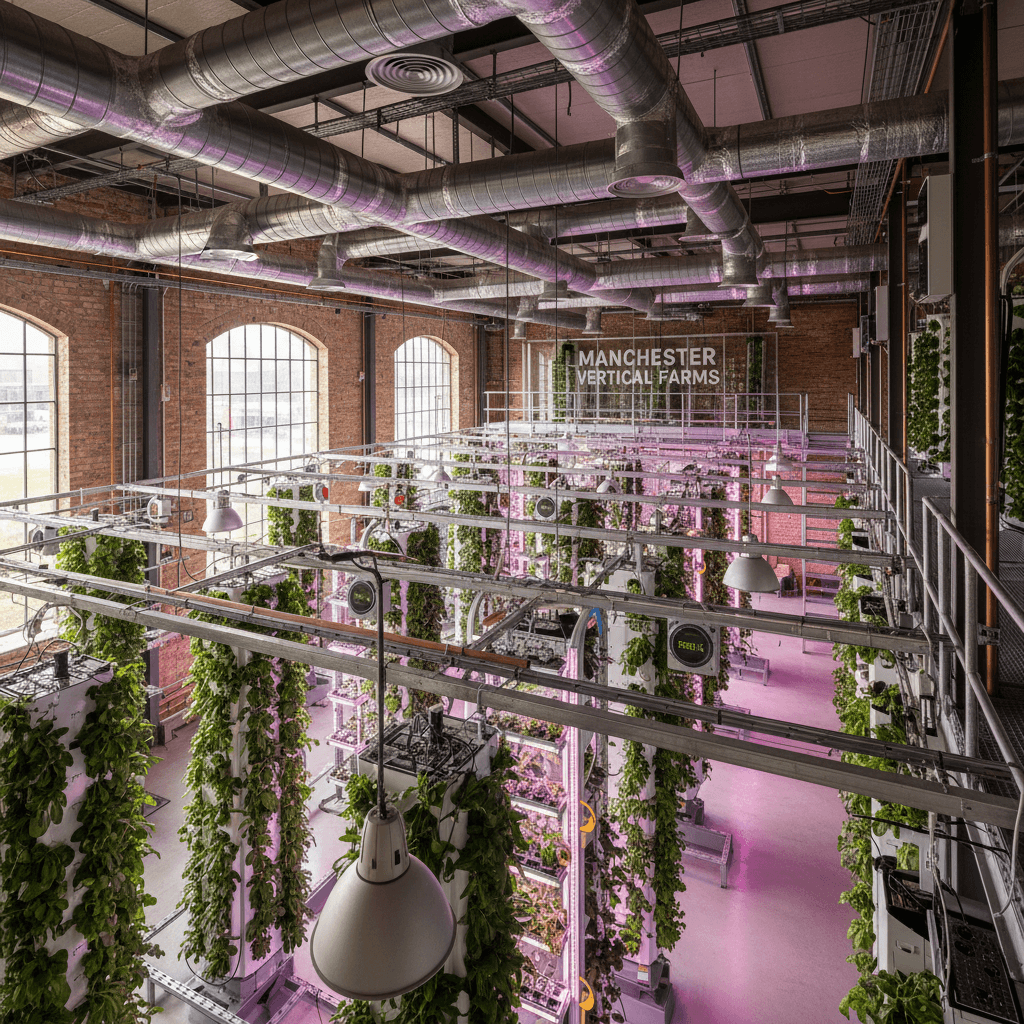
Climate Control
Regulate temperature, humidity, and CO2 levels indoors to optimize growing conditions and reduce environmental stress.
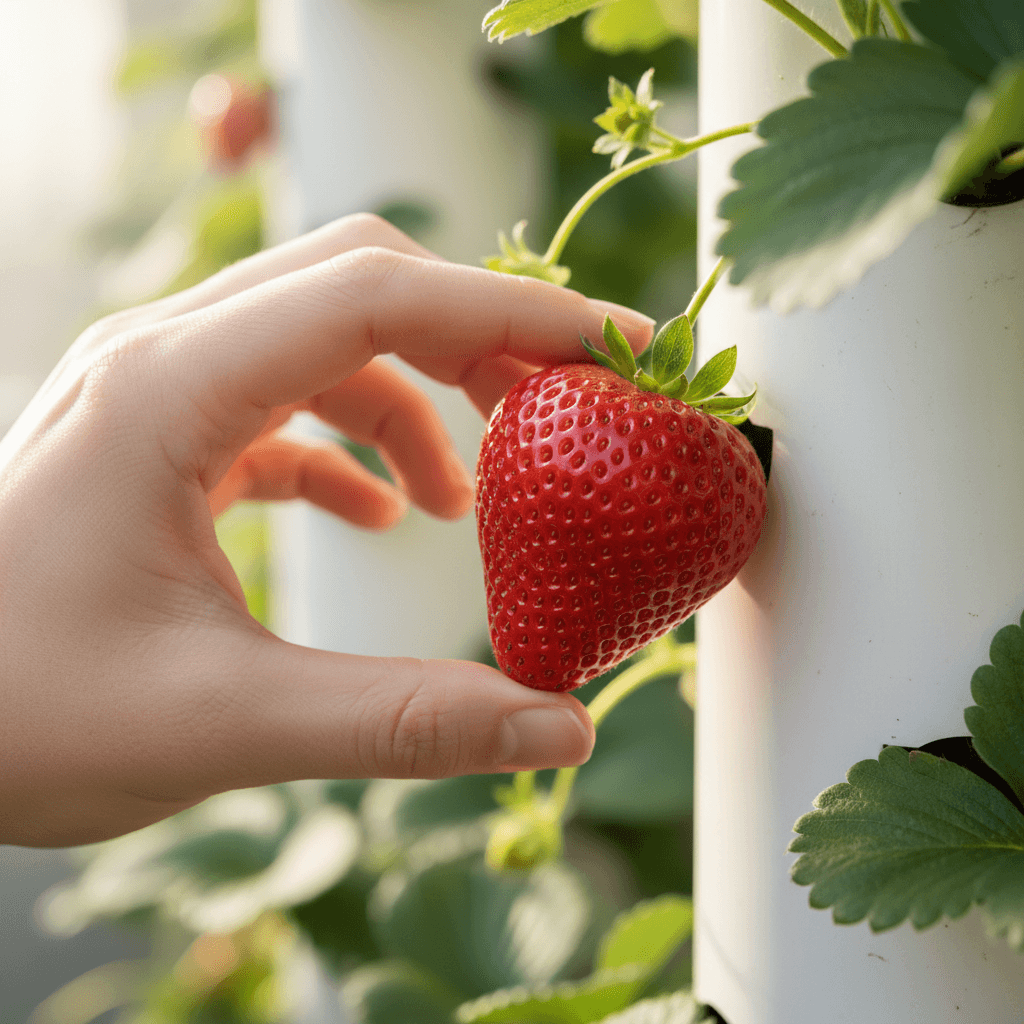
Pesticide-Free Growing
Controlled indoor environments eliminate pest pressure, allowing chemical-free cultivation for cleaner, safer strawberries.
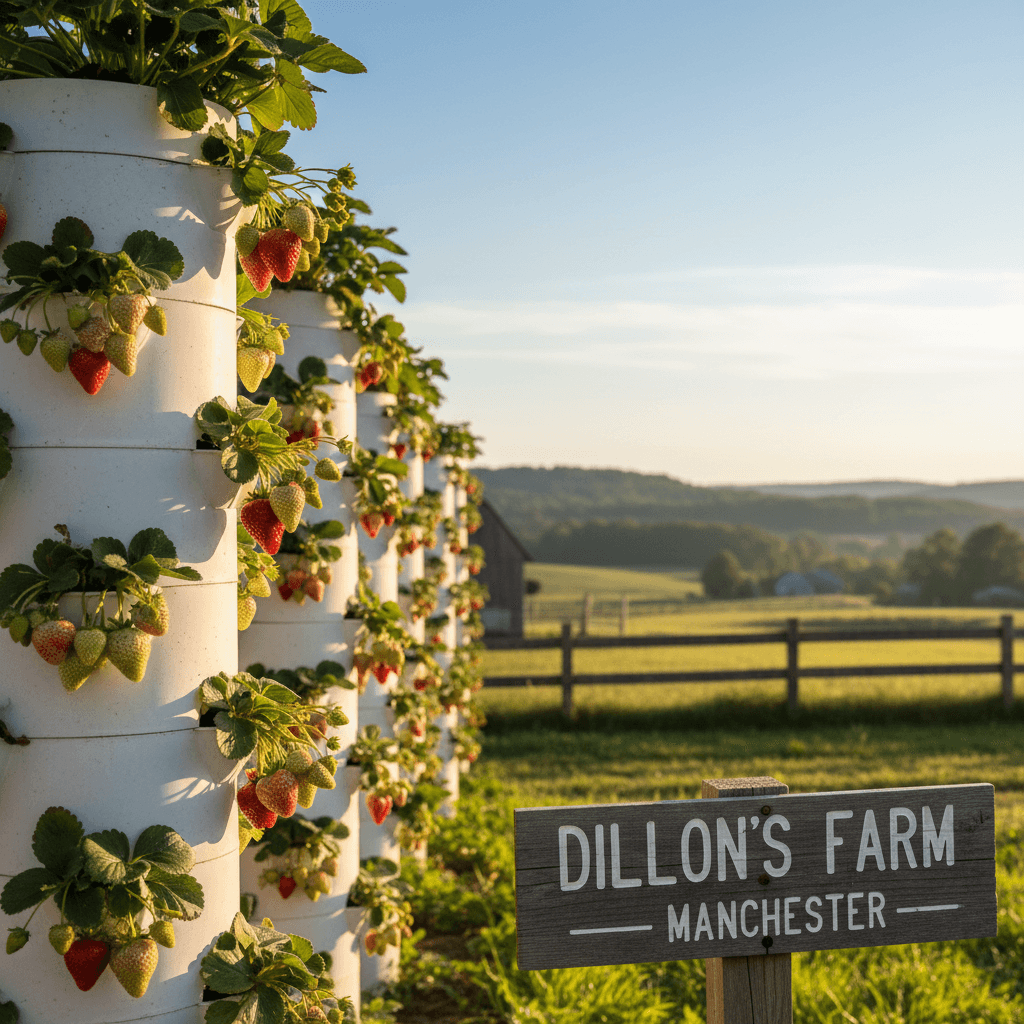
Natural Sunlight
Outdoor towers harness Manchester's daylight, reducing energy costs while delivering naturally sun-ripened strawberries.
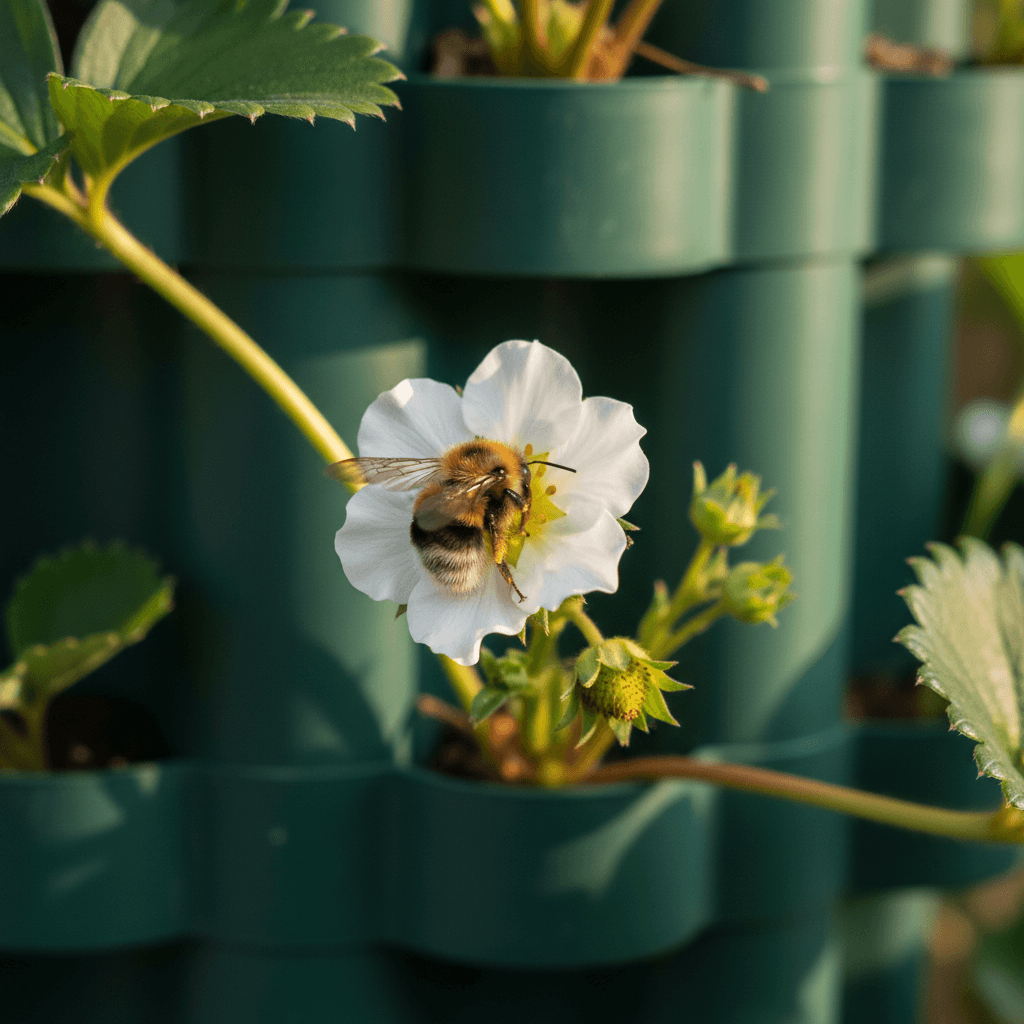
Pollination & Biodiversity
Outdoor growing invites bees and natural pollinators, improving fruit set and supporting local Manchester ecosystems.
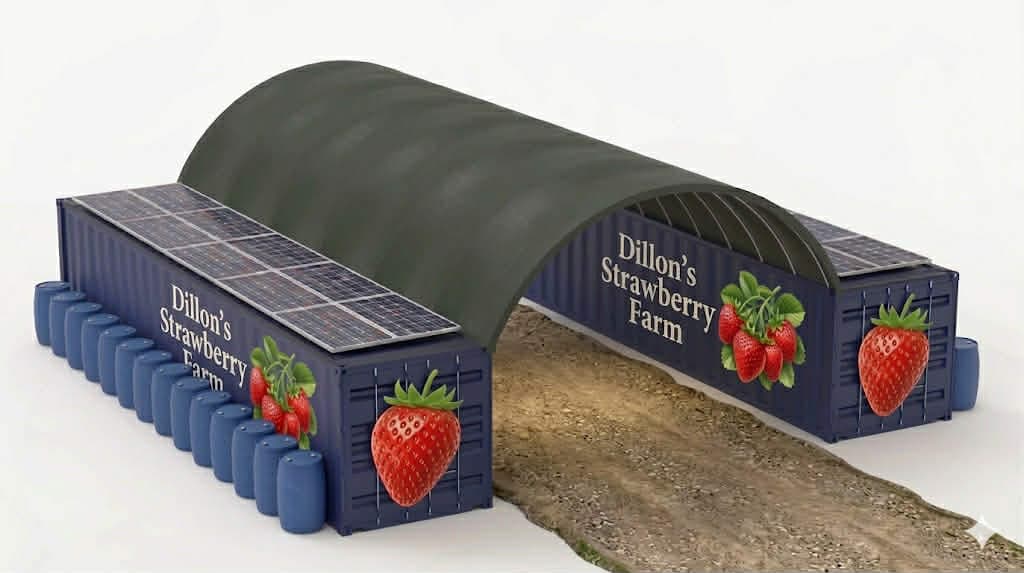
Lower Operating Costs
Outdoor towers eliminate electricity for lighting and climate control, reducing year-round operational expenses significantly.
Indoor and outdoor towers deliver measurable growth
Our vertical tower systems at Dillon's Strawberry Farm Ltd in Manchester produce consistent yields while reducing water use and growing space by significant margins.
40–50
Productive weeks per year (greenhouse)
Day-neutral strawberries in a controlled greenhouse environment deliver near-continuous harvest — up to 40–50 weeks annually.
48–72hrs
Harvest frequency once established
Pick ripe berries every 48–72 hours for peak sweetness and size. Continuous production, not seasonal batch harvesting.
30–100%
Yield boost vs horizontal greenhouse
Vertical systems significantly increase yield per square metre compared to traditional horizontal greenhouse layouts.
40
Plants per tower (Dillon's standard)
Each tower holds 40 plants, producing 20–40 kg of strawberries per tower per year at 0.5–1 kg per plant.
How vertical tower growing works
Learn about indoor and outdoor tower methods, setup requirements, and what to expect from each approach.
What's the difference between indoor and outdoor vertical towers?
Indoor towers use LED lights and climate control for year-round growing in controlled conditions — up to 40–50 weeks of continuous production. Outdoor towers rely on natural sunlight and pollination, with lower setup costs but a shorter productive window (around 40 weeks with a polytunnel). Both stack plants vertically to maximise space and yield per square metre.
How much space do I need to set up a vertical tower?
A single tower has a footprint of roughly 1 square metre. Indoor setups work in sheds, greenhouses, or spare rooms with electricity access. Outdoor towers need a well-drained location with at least 6–8 hours of direct sunlight daily. You can start with one tower and expand as you grow.
How do I handle pollination in a greenhouse?
Indoors, bees are usually absent so you must manage pollination yourself. Hand-pollinate flowers every day or two using a soft brush, or introduce a commercial bumblebee hive for more efficient and consistent results at scale. Outdoors, natural pollinators handle this for you — one of the key practical advantages of outdoor growing.
Can I grow year-round with vertical towers?
With indoor greenhouse towers, yes — day-neutral varieties produce for 40–50 weeks per year in controlled conditions. Outdoor towers follow seasonal patterns, typically producing from April through October in Manchester, extending to around 40 weeks with polytunnel protection.
How often do I harvest from a vertical tower?
Once established — usually around 2 months after planting — expect to pick ripe berries every 48–72 hours. This continuous picking model is very different from traditional farming's single annual harvest and means your towers are producing income almost constantly throughout the growing season.
What yields can I expect from a single tower?
At 40 plants per tower and 0.5–1 kg per plant annually, each tower produces 20–40 kg of strawberries per year. Indoor towers in optimal conditions tend toward the upper end of this range. Yields improve as plants establish and your management routine matures.
Ready to get started?
Contact us for Strawberries or to Support Us.
Pricing & Delivery Details for Bare Root Strawberry Plants
Compare 6 trusted UK suppliers with exact tiered pricing and delivery terms. All prices approximate and subject to variety and availability.
RW Walpole
£0.20–£0.35
per plant (tiered)250–499: ~£0.28–£0.35 each. 500–999: ~£0.24–£0.29. 1,000+: ~£0.20–£0.25. Free delivery on orders over ~£100; smaller orders £8–£15. Dispatched late autumn to early spring. Frigo plants year-round.
Free delivery over ~£100
£8–£15 fee for smaller orders
Bare-root: late autumn to spring
Frigo plants year-round
James McIntyre & Sons
£0.26–£0.45
per plant (tiered)10 plants: ~£0.35–£0.45 each. 20 plants: ~£0.30–£0.38. 50+: ~£0.26–£0.32. Albion at lower end for bulk. Flat rate delivery £6–£9 under £75; free over £75. Tracked courier, dispatch Nov–Mar.
Flat rate delivery £6–£9 under £75
Free delivery over £75
Tracked courier, Nov–Mar dispatch
Chris Bowers & Sons
£0.28–£0.42
per plant (tiered)Up to 50: ~£0.32–£0.42 each. 50–100: ~£0.28–£0.34. Bespoke orders on request. Seascape follows these tiers. Delivery £5–£12 by weight; free over £100. Bare-root Nov–Apr.
Delivery £5–£12 by order weight
Free delivery over £100
Bare-root Nov–Apr; potted year-round
J. Parker's | strawberry-plants.co.uk | Thompson & Morgan
£0.21–£0.50
per plant (by supplier & qty)J. Parker's: 30 plants £0.30–£0.37, 60 plants £0.25–£0.30, 250+ £0.21–£0.27. Free delivery over £50. | strawberry-plants.co.uk: 20–99 £0.33–£0.40, 100–499 £0.27–£0.33, 500+ £0.22–£0.28. Free delivery over £150. | Thompson & Morgan: 10–20 plants £0.40–£0.50, 50+ £0.23–£0.31. Free delivery over £60.
J. Parker's: free delivery over £50
strawberry-plants.co.uk: free over £150
Thompson & Morgan: free over £60
All dispatch bare-root Oct–Mar
Support Us and Grow with Us
Help Dillon's Strawberry Farm Ltd advance vertical growing technology. Your sponsorship directly funds new towers and supports sustainable UK agriculture.